A foundational resource for parents, homeschool families, and students on the skills that actually make someone “good at science” beyond memorizing facts.
With experience teaching and tutoring science across age groups, I’ve watched the same pattern play out again and again: the students who struggle in science aren’t usually missing facts. They’re missing skills.
They can define “photosynthesis” on a vocabulary quiz but freeze when asked to design an experiment. They can recite the steps of the scientific method but can’t tell you whether a claim in a news article is actually supported by evidence.
This page is my attempt to lay out, in one place, what the real skills of science are, why they matter more than ever, and how they develop so families and students have a map for where they’re headed and why it’s worth the trip.
Table of Contents
- Why Science Skills Matter More Than Facts
- The Core Skills: What “Thinking Like a Scientist” Actually Means
- Age-Appropriate Skill Development: A Roadmap by Stage
- Common Mistakes Families and Students Make
- Building a Science-Thinking Home System
- Trusted Resources for Going Deeper
- How I Can Help
Why Science Skills Matter More Than Facts
Ask most adults what they remember from science class, and you’ll get fragments: the parts of a cell, the periodic table, maybe a dissection.
Ask them what they actually use from science class in daily life, and the answer is almost never a memorized fact.
It’s the ability to evaluate a claim, notice when evidence doesn’t support a conclusion, or design a fair test before jumping to a decision. That’s the part of science education that sticks and it’s also the part that’s quietly slipping.
The data backs this up, and it’s sobering
On the most recent National Assessment of Educational Progress (NAEP), the average eighth-grade science score was 4 points lower than in 2019, the previous assessment year, and was not significantly different compared to 2009 meaning more than a decade of essentially flat performance in a subject that’s supposed to be building the reasoning skills students need for everything else.
The assessment doesn’t just test recall; it measures students’ ability to engage in scientific inquiry and to conduct scientific investigations in real-world contexts, which is exactly the kind of applied thinking that tends to lag behind rote content knowledge.
Meanwhile, the demand for this thinking is only accelerating on the other end of the education pipeline. The World Economic Forum’s 2025 Future of Jobs Report found that analytical thinking remains the top core skill for employers, with seven out of 10 companies considering it as essential; ranking above technical skills, leadership, and even AI literacy.
Employers aren’t primarily looking for people who memorized more content. They’re looking for people who can look at a messy, ambiguous situation, gather relevant information, and reason their way to a defensible conclusion. That is, in essence, the scientific method applied to everyday problems.
This gap, strong demand for reasoning skills, weak and stagnant development of them, is exactly the space this page, and my tutoring practice, is built to address.
Science taught as a list of facts to memorize for Friday’s quiz doesn’t build that muscle. Science taught as a way of thinking does. Both are valuable.
The rest of this page breaks down what that actually looks like, skill by skill and stage by stage.
The Core Skills: What “Thinking Like a Scientist” Actually Means
When I talk about “science skills” with families, I’m not talking about a longer vocabulary list. I’m talking about a specific, learnable set of thinking habits. Here’s how I break them down and why each one matters.
The Scientific Method — As a Thinking Tool, Not a Poster
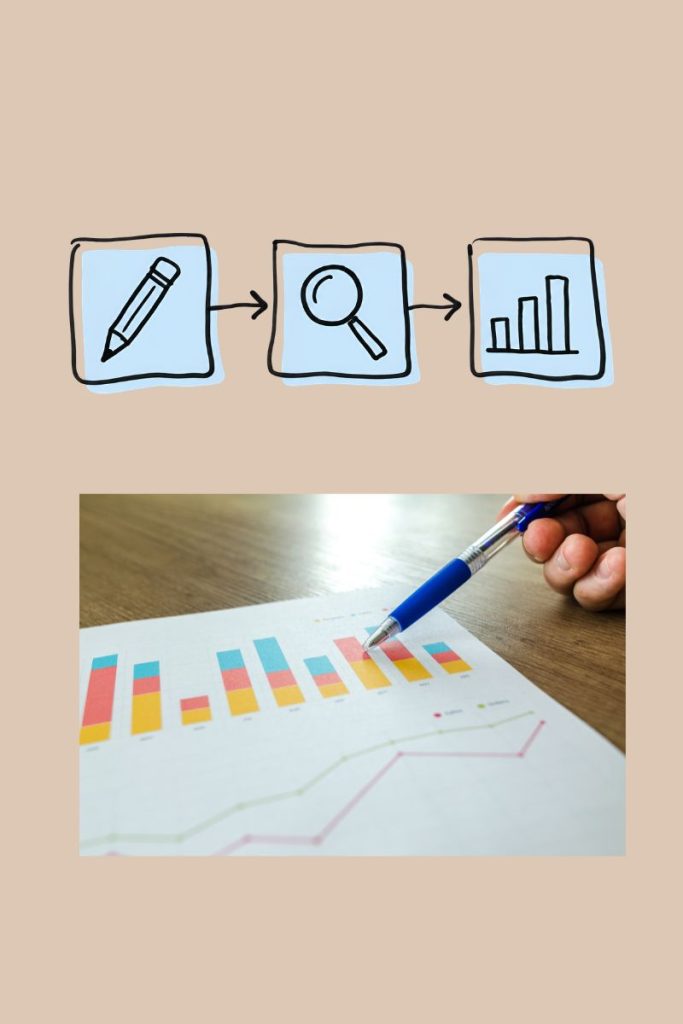
Most students meet the scientific method as a six-step diagram to memorize and regurgitate: question, hypothesis, procedure, data, analysis, conclusion.
That’s not wrong, but it’s incomplete and treating it as a rigid recipe actually undersells what makes it powerful.
I may not be a certified teacher with a doctorate in education, but I am a pharmacist with a doctorate in science. In practice, real scientific thinking is far more circular and messy than the textbook flowchart suggests: ideas get revised, tested again, and refined based on what the evidence shows.
That non-linear, revise-and-retest quality is precisely what I try to help students experience and learn, not just recite.
A student who has genuinely internalized the scientific method doesn’t need a poster to remember it.
They instinctively ask “how would I test that?” when they hear a claim, whether it’s about plant growth or about whether a new phone case is actually “drop-proof.”
Critical Thinking: Built, Supported, and Expanded, Not Assumed
Critical thinking is one of those phrases that shows up on every school’s mission statement and almost nowhere in an actual lesson plan.
I treat it as a skill with a developmental arc, not a trait some kids have and others don’t.
Building it starts with simple habits: asking “how do you know that?” and “what else could explain this?” as a normal part of conversation, not just during science time.
Supporting it means giving students low-stakes opportunities to be wrong because critical thinking requires tolerating uncertainty, and kids who are punished for wrong guesses stop guessing.
Expanding it means gradually increasing the ambiguity of the problems: from “which of these two plants grew taller” to “is this study’s conclusion actually supported by its data.”
Science Application Over Memorization
A student who can define “independent variable” on a quiz but can’t identify one in a real experiment hasn’t learned the concept. They’ve learned the definition.
I prioritize application: given a scenario (does the type of music affect how fast plants grow? does the color of a car affect how hot it gets in the sun?), can the student identify what’s being changed, what’s being measured, and what’s being held constant?
This is a harder skill to teach and a harder skill to test, which is exactly why I think it gets overlooked. It’s also the skill that transfers to other subjects, to the workplace, to daily decision-making.
CER: Claim, Evidence, Reasoning
CER is one of the most useful frameworks in science education, and it’s really fun once you get the hang of it.
Done right, it teaches students to make a specific, testable claim, back it with actual evidence (data, observations, sourced facts — not opinions), and then explain the reasoning that connects the evidence to the claim using a scientific principle.
That last step — reasoning — is the piece students skip most often, jumping straight from evidence to claim without ever explaining why the evidence supports it.
I spend significant tutoring time specifically on the reasoning step, because it’s the part that separates “I have a hunch” from “I have an argument.”
Scientific Reasoning
Scientific reasoning is the broader cousin of CER, the ability to move logically from premises to conclusions using evidence rather than intuition, authority, or wishful thinking.
It includes recognizing correlation versus causation, understanding sample size and bias, and being able to hold a conclusion loosely enough to revise it when new evidence appears.
This is genuinely difficult for developing brains (and, frankly, for a lot of adults), which is why I introduce it gradually and revisit it constantly rather than teaching it as a single unit.
Observation vs. Inference
This distinction sounds simple and is deceptively hard to apply consistently. An observation is something you directly detect with your senses or instruments: “the leaf is yellow,” “the beaker feels warm.”
An inference is a conclusion you draw based on that observation plus prior knowledge: “the leaf is yellow because it isn’t getting enough sunlight.”
Students, and plenty of adults, blend these constantly, stating inferences as if they were observations.
Teaching students to pause and label which is which before drawing conclusions is one of the single highest-leverage skills I teach, because it’s the seed of skepticism and precision that everything else in science builds on.
Lab Reports
A well-written lab report isn’t busywork. It’s the moment a student has to organize everything they did and thought into a form someone else could actually follow and evaluate. It’s a communication tool.
It forces precision: vague procedures and hand-wavy conclusions become obvious the moment they’re written down for an outside reader.
I teach lab reports as a communication skill first and a formatting exercise second, though I do teach the formatting too, because structure (purpose, hypothesis, materials, procedure, data, analysis, conclusion) is what makes scientific communication legible across the world.
Graph Interpretation
Data visualization is everywhere! In news articles, in health reporting, in advertising, yet most people never learn to read a graph critically.
I teach students to check the axes before the trend line (a graph can look dramatic simply because someone truncated the y-axis), to distinguish what a graph actually shows from what a caption claims it shows, and to construct their own graphs accurately from data, not just interpret ones handed to them. This is one of the most transferable, real-world-applicable skills in the entire science curriculum.
Age-Appropriate Skill Development: A Roadmap by Stage
Science skills don’t develop all at once, and pushing a skill before a student is developmentally ready tends to backfire. It teaches frustration, not science. Here’s how I sequence skill-building across four broad developmental bands. These are guidelines, not hard cutoffs; every student moves at their own pace.
Early Elementary (Ages 5–8): Noticing and Wondering
At this stage, the goal isn’t formal procedure. It’s building the raw habits that everything later depends on.
- Observation skills: Describing what they see, hear, feel, and notice, using specific rather than vague language (“the ice is smaller and there’s a puddle” instead of “it changed”).
- Question-asking: Encouraging “why” and “what if” questions without rushing to answer them immediately. The question matters more than the answer at this age.
- Simple cause and effect: Understanding that changing something (more water, less light) leads to a different result.
- Basic observation vs. inference: Introduced very informally — “what did you actually see happen?” versus “what do you think that means?”
- Prediction as a game: Guessing what will happen before it does, then checking. This is the earliest seed of hypothesis-forming, kept low-pressure and playful.
Upper Elementary (Ages 9–11): Structuring the Process
Students at this stage can start handling actual procedures, as long as it’s concrete and hands-on.
- The scientific method, hands-on: Running simple, guided experiments with a clear question, one variable changed, and a measurable result.
- Fair testing: Understanding why you only change one thing at a time (an early, concrete version of variable control).
- Data recording: Keeping simple charts and tables — this is where graph literacy begins, reading and building basic bar graphs and line graphs. You may actually see this started in their math classes.
- Explicit observation vs. inference practice: Sorting statements into “things I saw” and “things I think” as a regular exercise.
- Early CER: Simplified into “What I think happened” (claim), “What I saw” (evidence), and “Why I think that’s what happened” (reasoning). Same skeleton, gentler language.
Middle School (Ages 12–14): Formalizing and Applying
This is where the formal skills click into place and where a lot of students either build real confidence or start disengaging.
- Full CER framework: Introduced by name and practiced explicitly across multiple science topics, not just as a one-time unit.
- Formal lab reports: Introducing standard structure — hypothesis, materials, procedure, data, analysis, conclusion — with feedback focused on precision and logical connection between sections.
- Variable identification: Independent, dependent, and controlled variables named and applied to real experimental design, not just multiple-choice definitions.
- Graph interpretation and construction: Reading more complex graphs (multiple data series, non-linear trends) and building accurate graphs from raw data.
- Critical thinking applied to sources: Beginning to evaluate whether a science claim in an article or video is actually supported by evidence, and identifying bias or missing information.
High School (Ages 15–18): Independent Scientific Reasoning
At this stage, students should be moving toward independence as they are capable of designing, executing, and critiquing scientific work with minimal scaffolding.
- Independent experimental design: Formulating their own testable questions and designing procedures to answer them, including identifying confounding variables and limitations.
- Advanced CER and argumentation: Constructing multi-step scientific arguments, addressing counter-evidence, and distinguishing strong reasoning from rhetorical persuasion.
- Statistical and data literacy: Understanding sample size, variability, correlation vs. causation, and the difference between statistical and practical significance.
- Critiquing real scientific literature and media claims: Reading actual studies or science journalism and evaluating the strength of the evidence and the validity of the conclusions drawn from it.
- Cross-disciplinary application: Recognizing that the reasoning skills built in science — evidence-based argument, logical structure, skepticism toward unsupported claims — apply directly to history essays, debate, personal finance, and beyond.
Common Mistakes Families and Students Make
I see the same handful of missteps repeatedly. Here’s what to watch for.
1. Treating the scientific method as a memorization exercise. Students who can recite the seven steps in order but can’t apply them to a novel problem haven’t actually learned the method, they’ve learned a poem. If your student can list the steps but freezes when asked to design their own experiment, that’s the signal to shift focus from recitation to application.
2. Confusing “critical thinking” with “being critical.” Some students (and, honestly, some curricula) mistake skepticism for cynicism, assuming every claim is suspect rather than learning to evaluate evidence fairly in both directions. Real critical thinking is just as willing to be convinced by strong evidence as it is to reject weak evidence.
3. Skipping the “reasoning” step in CER. This is the single most common CER mistake I see. Students state a claim, drop in a piece of evidence, and stop without ever explaining why that evidence supports the claim. The reasoning step is where the actual thinking happens, and it’s the step most often left out under time pressure.
4. Blurring observation and inference. “The plant died because it didn’t get enough water” is often stated as if it were an observation, when the observation is only “the plant is brown and wilted” the cause is an inference that may or may not be correct. Teaching students to explicitly separate these, even verbally, prevents a huge amount of sloppy reasoning down the line.
Moving on to more advanced mistakes…
5. Writing lab reports for the teacher instead of for a reader. Many students write lab reports assuming the reader (the teacher) already knows what they did, so they skip crucial details. A genuinely well-written lab report should be understandable, and repeatable, by someone with zero context.
6. Reading a graph’s trend without reading its axes. Students (and adults) routinely accept a graph’s visual “shape” without checking what the axes actually represent or where they start. A steep-looking trend can be manufactured entirely by axis scaling. Teaching students to check the axes first, every time, is a small habit with an outsized payoff.
7. Assuming science skills only apply in science class. Perhaps the biggest missed opportunity: families often compartmentalize “science” as one subject among many, when the reasoning skills it builds — evidence evaluation, logical structure, distinguishing observation from interpretation — directly strengthen reading comprehension, history and social studies argumentation, and everyday decision-making. Science skill-building pays dividends well outside the science classroom.
Building a Science-Thinking Home System
You don’t need a lab to build science skills at home. What you need are small, repeatable habits woven into daily life.
Here are systems I recommend to the families I work with:
- A “claim, evidence, reasoning” dinner-table habit. When your student makes an assertion (“that show is the best one”), ask them to back it up with evidence and reasoning, playfully. It normalizes the CER structure outside of formal schoolwork.
- An observation journal. A simple notebook where your student records daily observations such as weather, plant growth, a pet’s behavior without interpretation. Once a week, revisit entries and ask what inferences they can now draw. This builds the observation/inference distinction concretely and over time.
- A “how would you test that?” reflex. When a commercial, headline, or family debate makes a claim, make it a habit to ask questions. How would you actually test whether it’s true? This is the scientific method applied as a life skill, not a school assignment.
- A graph-of-the-month routine. Pull one graph from the news, a weather app, or a sports stat page each month. Spend five minutes discussing what it actually shows and whether the headline matches the data.
- A “one variable at a time” household rule. When your student wants to test something themselves (does the plant grow better with music? does a certain snack really affect their energy?), help them apply fair-testing logic. Change one thing, keep everything else the same, and record results.
- A dedicated space for messy failure. Science skill-building requires tolerating wrong hypotheses and failed experiments without treating them as failures of the student. Praise the process — the question asked, the test designed — more than whether the outcome matched the prediction.
None of these require special equipment or a formal curriculum.
They require consistency, and they compound. A student who’s “how do you know that?” conversations walks into a formal science class with confidence.
Trusted Resources for Going Deeper Into Scientific Thinking
For families who want to explore these ideas further, here are resources I genuinely recommend and use myself:
- Understanding Science (UC Berkeley) — An excellent, research-backed resource that reframes the scientific method as the iterative, nonlinear process it actually is rather than a rigid textbook recipe. Their How Science Works section is one of the best free explanations of real scientific process available online, and includes grade-level teaching guides.
- Next Generation Science Standards (NGSS) — The framework most U.S. science curricula are built around, useful for understanding what skills (not just content) students are expected to develop at each grade level.
- National Science Teaching Association (NSTA) — A deep library of teaching resources, articles, and vetted classroom activities from professional science educators.
- PhET Interactive Simulations (University of Colorado Boulder) — Free, high-quality interactive simulations that let students manipulate variables and observe results directly — genuinely useful for building intuition around fair testing and cause-and-effect.
- Purdue OWL: Lab Report Writing Resources — A clear, structured guide to formal lab report writing and scientific report structure, useful as a reference once students move into formal report writing in middle and high school.
- NAEP Science Assessment Results — For families curious about the national data referenced above and how science achievement is measured and trending over time.
How I Can Help Build Critical Thinking Skills With Confidence
Everything on this page reflects how I actually teach whether I’m working one-on-one with a tutoring student, supporting a homeschool family building a science curriculum, or running a small group class.
My classes are built around these same principles: skills over memorization, application over recitation, and a developmental sequence that meets students where they are rather than rushing them past the fundamentals.
If your student is stuck reciting facts they can’t apply, struggling to write a lab report that actually communicates their thinking, or simply needs a more structured way to build critical thinking skills at home, I’d love to help.
Reach out to learn more about current class offerings and tutoring availability, and let’s figure out the right starting point for where your student is right now.
Why Learn This From a Pharmacist?
Pharmacology is applied science literacy. Real evidence, real stakes, no room for guessing. As a pharmacist, I spent years evaluating clinical studies, weighing evidence against claims, and reasoning through data before it ever reached a patient.
That’s the same skill set I bring to tutoring: not just knowing scientific facts, but knowing how to think with them. Distinguishing solid evidence from a compelling anecdote or unique patient case, spotting a claim that outruns its data, and reasoning clearly from observation to conclusion.
I didn’t learn CER and scientific reasoning from a textbook chapter; I used them daily in practice. That’s the difference between teaching science skills in theory and teaching them the way working scientists actually apply them.