If you’ve ever watched a child’s eyes light up when they finally understand why their heart beats faster after running, or how a sneeze actually works, you already know: anatomy isn’t just a subject.
It’s one of the most exciting stories a young learner will ever get to explore, because it’s a story about them.
I bring a pharmacist’s background to teaching anatomy and physiology, which means I’ve spent years explaining how the body works to real patients, in real language, without the jargon overload.
I’ve taken that same approach into virtual tutoring for school-age students, and this guide is the resource I wish every family had on hand: a clear, friendly overview of the body’s major systems, why this subject matters so much, and simple ways to make it come alive at home.
Bookmark this page. Whether you’re a parent supplementing a biology unit, a homeschooling family building a full anatomy curriculum, or a student prepping for an exam, you’ll find something useful here.
Why Anatomy Matters
It’s easy to file anatomy away as “just another science topic,” something to memorize for a test and forget by summer. But anatomy is different from almost every other subject a student encounters, for one simple reason: it’s personal.
Anatomy turns abstract science into something they can feel
When a student learns about the digestive system, they’re not learning about some far-off concept, they’re learning about what happens after lunch.
When they study the respiratory system, they can put a hand on their own chest and feel it in real time. That immediacy is a gift for teaching.
Kids who struggle to stay engaged with abstract math or distant historical dates often perk right up when the “textbook” is their own body.
Learning human body systems builds lifelong health literacy
Understanding how the body works is the foundation for making good health decisions later in life, everything from knowing why sleep matters, to understanding a doctor’s explanation, to reading a medication label correctly.
As a pharmacist, I’ve seen firsthand how much confusion and anxiety stems from not understanding basic body systems. Teaching this well, early, is genuinely a gift that pays off for decades.
It strengthens scientific thinking
Anatomy naturally teaches cause and effect, systems thinking, and the idea that complex outcomes come from many small parts working together.
A student who understands how the circulatory system depends on the heart, lungs, and blood vessels working in sync is building the same mental muscles they’ll later use in chemistry, engineering, or any field involving interconnected systems.
It fuels genuine curiosity
Kids ask amazing questions: Why do I get goosebumps? Why does my stomach growl? Why do cuts scab over?
Anatomy is one of the few subjects where nearly every question has a fascinating, satisfying answer, and that steady stream of “ooh, that’s so cool” moments is exactly what keeps young learners motivated.
It supports future goals
Whether a student dreams of becoming a doctor, nurse, athletic trainer, veterinarian, or has no specific career in mind at all, a strong foundation in anatomy and physiology opens doors.
It’s one of the most practically useful sciences a young person can learn.
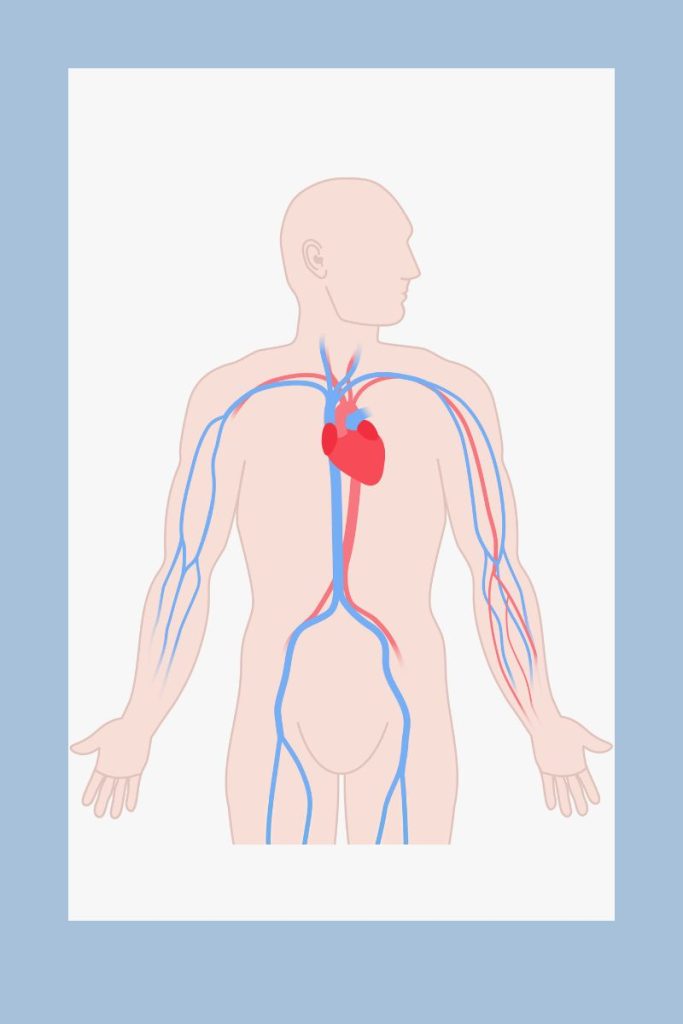
Overview of the Human Body Systems
The human body is made up of several major systems that work together like departments in a very well-run company, each with its own job, but constantly communicating and cooperating with the others.
Here’s a tour through each one, written the way I’d explain it to a student: clear, visual, and rooted in everyday experience.
1. The Skeletal System
Your skeleton is the body’s framework, made up of 206 bones in an adult (kids actually start with more, around 300, and many fuse together as they grow).
Beyond just holding you upright, bones protect vital organs (think of the skull guarding the brain, or the rib cage shielding the heart and lungs), store minerals like calcium, and even manufacture blood cells inside bone marrow.
Fun hook for kids: Bones are living tissue, not the dry, dead-looking things in a Halloween decoration. They’re constantly rebuilding themselves throughout your entire life.
2. The Muscular System
Muscles are the body’s engines of movement.
There are three types: skeletal muscles (the ones you control, like biceps), smooth muscles (working automatically in organs like the stomach), and cardiac muscle (found only in the heart).
Muscles work in pairs, one contracts while its partner relaxes, which is why you can bend and straighten your arm.
Fun hook for kids: Every time you smile, you’re using over a dozen muscles. Frowning actually takes more muscles in most people, which is a fun (if slightly cheeky) reason to smile more.
3. The Circulatory (Cardiovascular) System
This system includes the heart, blood vessels, and blood, and it’s essentially the body’s transportation network.
The heart pumps blood through arteries, veins, and capillaries, delivering oxygen and nutrients to every cell while carrying away waste products like carbon dioxide.
Fun hook for kids: Laid end to end, the blood vessels in one person’s body could circle the Earth more than twice.
4. The Respiratory System
This system, made up of the lungs, trachea, and airways, is responsible for gas exchange: bringing oxygen in and pushing carbon dioxide out.
It works hand-in-hand with the circulatory system, since oxygen picked up in the lungs has to be delivered somewhere.
Fun hook for kids: You breathe in and out roughly 20,000 times a day without ever thinking about it.
5. The Digestive System
From the mouth to the stomach to the intestines, the digestive system breaks food down into nutrients the body can actually use, and disposes of what it can’t.
It’s a long, winding tube (about 30 feet in adults) doing complex chemistry every single day.
Fun hook for kids: That stomach “growling” sound is called borborygmi, and it happens even when you’re not hungry, it’s just gas and fluid moving through your intestines.
6. The Nervous System
The brain, spinal cord, and nerves form the body’s command and communication center.
It controls everything from conscious decisions (like deciding to raise a hand in class) to automatic processes (like your heart beating without you thinking about it).
Fun hook for kids: Nerve signals can travel up to 268 miles per hour, faster than a Formula 1 race car.
7. The Endocrine System
This is the body’s chemical messenger system, made up of glands (like the thyroid, pancreas, and adrenal glands) that release hormones into the bloodstream.
Hormones regulate growth, mood, metabolism, and so much more, often working slowly and quietly in the background.
Fun hook for kids: Growth spurts, mood swings during adolescence, and even feeling “butterflies” in your stomach before a big test are all hormone-driven.
8. The Immune System
This is the body’s defense force, made up of white blood cells, the lymphatic system, and various organs working together to fight off germs and infections.
As someone with a pharmacy background, this is a system I especially love teaching, because understanding it helps kids make sense of things like vaccines, fevers, and why they feel tired when they’re sick.
Fun hook for kids: A fever isn’t the enemy, it’s actually your body intentionally raising its temperature to make it harder for germs to survive.
9. The Urinary (Excretory) System
The kidneys, bladder, and related organs filter waste and excess fluid out of the blood, maintaining the body’s internal balance.
This system quietly does an enormous amount of chemistry work every day.
Fun hook for kids: Your kidneys filter your entire blood supply about 40 times a day.
10. The Integumentary System
This is the skin, hair, and nails, the body’s largest organ system, acting as a protective barrier against germs, regulating temperature through sweat, and even helping produce vitamin D from sunlight.
Fun hook for kids: You shed about 30,000 to 40,000 dead skin cells every single minute.
11. The Reproductive System
This system is responsible for growth, development, and reproduction. Age-appropriate discussion of this system varies widely by grade level, and I always tailor how much detail to cover based on the student’s age and a family’s preferences.
For the younger grades or more conservative audiences you’ll see me refer to this as the Growth and Development System and only cover what is appropriate for the audience.
Anatomy by Age: What to Expect at Each Stage
One question I hear often from parents is, “How much detail is too much?” The right depth really does depend on your child’s age and stage. Here’s a general roadmap, though every learner moves at their own pace.
Early elementary (roughly ages 5–8):
At this stage, the goal is simple recognition and wonder. Kids this age love learning the names of major organs, understanding that bones protect their insides, and discovering fun facts (like how many bones babies have compared to adults). Keep it visual, playful, and short. Attention spans are real, and two focused blocks of 10 minutes beats thirty distracted ones.
Upper elementary (roughly ages 9–11):
Kids in this range are ready to start connecting systems to each other. This is a great age to introduce the idea that the heart and lungs work as a team, or that the brain sends signals down the spinal cord to the muscles. They can also start handling slightly more precise vocabulary, like “arteries” and “capillaries,” instead of just “blood tubes.” We may start discussing hygiene like regular showers to clean bacteria and deodorant if appropriate.
Middle school (roughly ages 12–14):
This is where anatomy starts to resemble a true academic subject, often tied to state science standards. Students at this age can dig into how systems maintain balance in the body (a concept called homeostasis), start learning cellular-level detail, and begin exploring the “why” behind health habits like sleep, nutrition, and exercise.
High school (roughly ages 15–18):
Depending on the course (general biology, honors biology, or AP-level anatomy and physiology), high schoolers are ready for real depth: biochemical pathways, detailed organ system interactions, and exam-style critical thinking.
This is also the stage where career interest often develops, and where a tutor with real clinical experience becomes especially valuable for connecting classroom material to real-world application.
Wherever your student falls on this spectrum, the goal is the same: build genuine understanding, not just memorized vocabulary, so the knowledge actually sticks.
Common Questions Parents Ask
“My child says anatomy is ‘boring’ or ‘too hard.’ What’s going on?”
Often, this comes down to how the material is being presented.
Anatomy taught as a wall of vocabulary to memorize feels tedious to almost anyone.
Anatomy taught through stories, real-life connections, and hands-on activities tends to flip that reaction entirely. If your child is struggling, it’s worth asking whether the issue is the subject itself or simply the format it’s being delivered in.
“How much anatomy does my child actually need to know for school?”
This varies by grade level, state standards, and whether your child is in a general science class or a more specialized course. A tutor can help identify what your child’s curriculum requires and focus study time efficiently, rather than trying to cover everything at once.
“Is it normal for my child to ask questions that feel a little too advanced (or a little embarrassing)?”
Completely normal, and honestly a great sign of genuine curiosity.
Kids notice their bodies changing and want to understand why. Having a calm, knowledgeable, trusted adult to ask helps normalize those questions instead of letting them turn into confusion or anxiety.
“My child struggles with reading-heavy textbooks. Will anatomy be hard for them?”
Not necessarily. Anatomy is one of the more visual, hands-on sciences out there, which makes it a great fit for kids who learn better through images, models, and discussion rather than dense reading.
A tutoring approach that leans into diagrams, verbal explanation, and interactive discussion can make a big difference for these learners.
How These Systems Work Together
One of the most important lessons in anatomy isn’t memorizing each system in isolation, it’s understanding that none of them work alone.
When a student runs to catch a bus, their nervous system sends the signal to move, their muscular system contracts to make it happen, their skeletal system provides the leverage, their respiratory system speeds up to supply oxygen, their circulatory system rushes that oxygen to muscles, and their endocrine system releases adrenaline to help power the whole thing.
That kind of connected, big-picture thinking is what turns memorized facts into real understanding, and it’s the heart of how I approach tutoring.
Simple Ways to Make Anatomy Engaging at Home
You don’t need a lab coat or a skeleton model to bring this subject to life (though those are fun too). Here are approachable, low-effort ideas that busy parents can use to reinforce learning between tutoring sessions.
1. Turn mealtime into a mini digestive-system lesson
While making dinner, ask your child to trace the journey of a bite of food from mouth to… well, you know where. It’s silly, it’s memorable, and it sticks.
2. Use a stethoscope (or even just a paper towel roll)
Let kids listen to their own heartbeat before and after jumping jacks. It’s a simple, hands-on way to actually feel the circulatory and respiratory systems working together in real time.
3. Play “name that system” during downtime
In the car or waiting room, call out an action (“blinking,” “digesting a snack,” “healing a scraped knee”) and have your child name which system is responsible. It’s a five-minute game with real educational payoff.
4. Draw a body outline together
Butcher paper, a big sheet from a roll of wrapping paper, or even chalk on the driveway works. Trace your child’s body and let them label or draw in the organs they’ve learned about.
Visual, tactile learning tends to stick far longer than reading alone.
5. Use everyday injuries as teaching moments
A scraped knee, a sneeze, a yawn, a growling stomach, these ordinary moments are perfect, low-pressure opportunities to ask “why do you think that happens?” before offering the explanation.
6. Watch short, high-quality videos together
A five-minute video on how the heart pumps blood, paired with a quick conversation afterward, does wonders for retention. Look for content from trusted educational sources rather than lengthy documentaries that can lose a child’s attention.
7. Build vocabulary through word games
Anatomy comes with a lot of new vocabulary. Simple flashcards, a whiteboard word-of-the-week, or even a silly rhyme (“the femur is the thigh, way up high”) can make challenging terms far less intimidating.
8. Celebrate curiosity over correctness
If your child asks a question you can’t answer, that’s a win, not a gap. Write it down together and bring it to the next tutoring session, or look it up together. Modeling curiosity matters more than having every answer.
Helpful Resources for Learning at Home
- Picture books and illustrated encyclopedias on the human body are wonderful for younger learners, since strong visuals do a lot of the explaining.
- Interactive apps and websites with 3D body models let students rotate and explore organs from every angle, which is especially useful for visual and kinesthetic learners.
- Physical models or puzzles, like a build-your-own skeleton or organ puzzle, turn anatomy into hands-on play.
- Documentaries geared toward kids (short-format, age-appropriate ones) can reinforce concepts in an entertaining way.
- Flashcard sets, either store-bought or homemade, are excellent for reinforcing vocabulary between sessions.
- One-on-one tutoring ties all of the above together. A tutor can meet your child exactly where they are, correct misunderstandings in real time, and adjust pacing to match how quickly (or slowly) a concept clicks.
Why Work With a Tutor Who Has a Clinical Background
Anatomy and physiology can be taught from a textbook, but it comes alive when it’s taught by someone who has applied this knowledge in the real world.
My background as a pharmacist means I don’t just know what the pancreas does, I’ve spent years explaining, in plain language, why it matters for real people managing real health conditions.
That translates directly into tutoring: I know how to take a complex, clinical topic and break it into something a ten-year-old (or a sixteen-year-old prepping for an AP exam) can genuinely understand and enjoy.
Virtual tutoring sessions are built around your student’s specific needs, whether that’s homework support, exam preparation, homeschool curriculum guidance, or simply nurturing a growing love of science.
Every session is interactive, patient, and tailored to how your child learns best.
Ready to Bring Anatomy to Life for Your Student?
If your child is curious about how their body works, or if a school subject has started to feel more like a chore than a discovery, I’d love to help change that. Reach out to learn more about virtual anatomy and physiology tutoring designed to make science feel exciting again, for students and parents alike.